Welcome!

Do you have APA formatting questions? Thesis statements got you down? Need to study grammar? Need some help with critical thinking? Having trouble with literary analysis or research? Want to take a look at some example essays? Well, I probably have a post here somewhere that can help you. Please use "Search This Blog," the "Labels," or my "Blog Archive" to help you find what you need. Have questions about what you find? Please feel free to comment or ask questions. I do moderate comments, and I try to respond to all topical questions and comments in a timely manner.

Wednesday, July 25, 2018

Fallout 4 and The People: Gaming with Moral Compass

Fallout 4 screenshot of main quest ending cut scene:
War. War Never Changes

The cat that lives on the porch at Abernathy farm is permanently out of the post- apocalyptic cardboard box: I am a huge Fallout nerd and a fan of the Fallout video game series.


I give my characters thoughts,  and I help them come to terms with their decisions:

At the end of it all, I returned to Sanctuary Hills, not ready to face my synthetic son, Shaun. How could he ever replace the flesh and blood man I'd betrayed? He'd referred to his mother as "collateral damage," and I'd never really gotten over the sting of it. Was that what drove me, in the end, to destroy the Institute, his legacy? I don't think so: I think it was his insistence on creating his own "collateral damage" of the people I'd come to know and knew I needed to protect.  I removed my power armor, stored away my weapons in the workshop, and changed into a clean, blue suit. I ignored the congratulatory conversations; only Nick Valentine, with the conscientiousness of a prewar man, seemed to truly understand the heaviness of my heart and soul. 


Making Moral Decisions in Fallout 4


Fallout 4 has a permanent home in our PlayStation 4.  I've played through Fallout 3, Fallout: New Vegas, and Fallout 4 several times, each time telling myself I'm going to make different decisions, follow different paths, complete different quests, or complete quests differently.  Every single time, however, I play as though I'm Captain America, making decisions based on nothing more nor less than my own (and Cap's) moral compass. Where does my plan to do things differently go awry?  In Fallout 4, specifically, I can't bring myself to ignore Preston's pleas for help defending The Castle from The Institute, so I save The Castle, and I lock myself into the same ending I've seen each time I've played the game. All of those innocent settlers and Minutemen at The Castle need me. I cannot ignore the call for help from the people.

Speaking of the people, the main reason I cannot bring myself to work with a faction is because the factions don't care for the entirety of the Commonwealth, the entirety of the population, the people. The Brotherhood of Steel, though it would be fantastic to see Liberty Prime in action, again, have horrendously awful things to say to Nick, my synth friend, or Hancock, my ghoul friend. The Brotherhood would rather see them all eviscerated by Deathclaws than lift a finger to help them live better lives. The Railroad folks care mostly about the synths and eliminating The Institute scientists and civilians. The Institute wants to replace real people with synthetic people, create a dangerous nuclear reactor, all the while refusing to help the people of the Commonwealth. Each and every faction wants to destroy freedom, create and maintain strict control, and determine who does or does not get marked as an enemy.

Making Moral Decisions in Life

It pains me to say so, but in Trump's America, these "decisions" to take under my protection all of the people or only some of the people are too close to real life, are they not?  Of course I have to do the right thing: These aren't really "decisions" I give myself liberty to make. I have to remember that all the people of the Commonwealth, whether they are people trapped in irradiated bodies or people whose minds are trapped in synthetic bodies, all deserve the opportunity to live together in peace. Pitting one faction against another accomplishes nothing. It never does, and therein lies the lesson that makes me repeat all the same decisions I've made in the past, just more emphatically. Even when gaming, I must remember that this country is made up of the people. We have a moral obligation to help all the people.

Did I do the right thing? Only time will tell, just as time will make the sting of my decisions over the past several months fade from the forefront of my mind. Only after the memories fade will I be able to intellectualize this new world and what it has made of me and my moral compass.  In the end, I chose to protect the entirety of the people, and I cannot fathom ever regretting that.


Want to read more? try

Remove Mobile Strike Video Advertisements
What is Toyification?
The Power of Story: The Power of Narrative


Copyright Amy Lynn Hess. Please contact the author for permission to republish.

Friday, June 29, 2018

Make-up: Carmindize or Contour?

Are you living in a 3-dimensional world?

Does anyone remember Carmindy from What Not to Wear? She always exuded an easy-peasy confidence and an easy-breezy style. This translated, too, to the way she taught her makeover guests how to do their faces. Emphasizing what made a guest already beautiful was her thing.


Get Carmindized with the 5 Minute Face


I was so completely impressed with her and her "5 Minute Face" that I practiced it until I perfected it and could list all my favorite products and their shade numbers by using only one hand. When and if I received a compliment on my makeup, I proudly told the complimenter that I "Carmindized."

Fast forward five years, since the show went off the air, and I haven't worn makeup but a few times in all those years. I've been sick, really sick, and it just wasn't something I had the energy or inclination to do. Now that I'm feeling better and interested in wearing a little makeup, again, I'm absolutely horrified by new makeup trends. They're scary, created by celebrities I don't respect very much, and complicated. More than that, though, these new trends mimic a troubling trend in the way people think about their own faces and their own lives.

Contouring 2-Dimensional Faces

Why do women demonstrating makeup on YouTube look dirty, like an online army of  Mary Poppinses and their sooty rooftop compacts? Some of them look green, some purple, and most look startlingly grey. Yes, I've heard of contouring, and I'm good at it because I was trained in stage makeup and did an A+ Mad Hatter and an extreme aging sample for my final exam. It's not something I would wear to the local Mexican restaurant for enchiladas rancheras and a side of guacamole, however. What about when people look at the side of such a face from as close as the next table instead of the fourth row of a theatre? Dirt: It looks like dirt. In real life we don't just get frontal views of one another, but this look wasn't really meant for real life or anything other than frontal views, was it? I don't think it ever was.

In an age where each second of each minute of each hour of each day is captured by photographic evidence, people are thinking about faces in a frontal photographic way. They are thinking of themselves in two dimensions. Today's makeup is photographic makeup sans a lighting designer, talking head video makeup, social media makeup, character makeup - albeit not quite as extreme as the Mad Hatter. It's makeup for people hitting the clubs and taking duck-face Instagram images. It's not the easy-breezy "5 Minute Face" we saw practiced from 2003 to 2013 on TLC. It's not even about getting out into the world and being true to oneself, which is what Carmindy constantly emphasized. Is that advice to be oneself really that outdated?

We Live in a 3-Dimensional World

Give me back my "5 Minute Face," my naturally dimensional face, please.  Being a naturally multidimensional person and putting on a face that shows others I want to be in the world, the real world, is so much more my style than putting on a face that's meant only for living a series of two-dimensional photo ops.

Want to read more? Try 

Stitch Fix Review: Styling at 40
Product Review: MICA Beauty Cosmetics Vita-C Exfoliating Peeling Gel
Hair Accessories to Finish a Professional Hairstyle


Copyright Amy Lynn Hess. Please contact the author for permission to republish.


Thursday, May 17, 2018

What if . . . ? A Brief Case for Learning Community Classroom Design


What if . . . we designed active learning spaces with collapsible walls?

Learning communities can take many forms. Some are based on grouping students by extracurricular activities and interests, some are based on course or disciplinary groupings, and some are based on the teaching philosophies and pedagogical methods of groups of faculty members.

No matter how a learning community is created, however, something that remains consistent is the need for those students in that community to learn together.  That need requires a space, and a space designed for learning communities will facilitate that sense of, well . . . community.


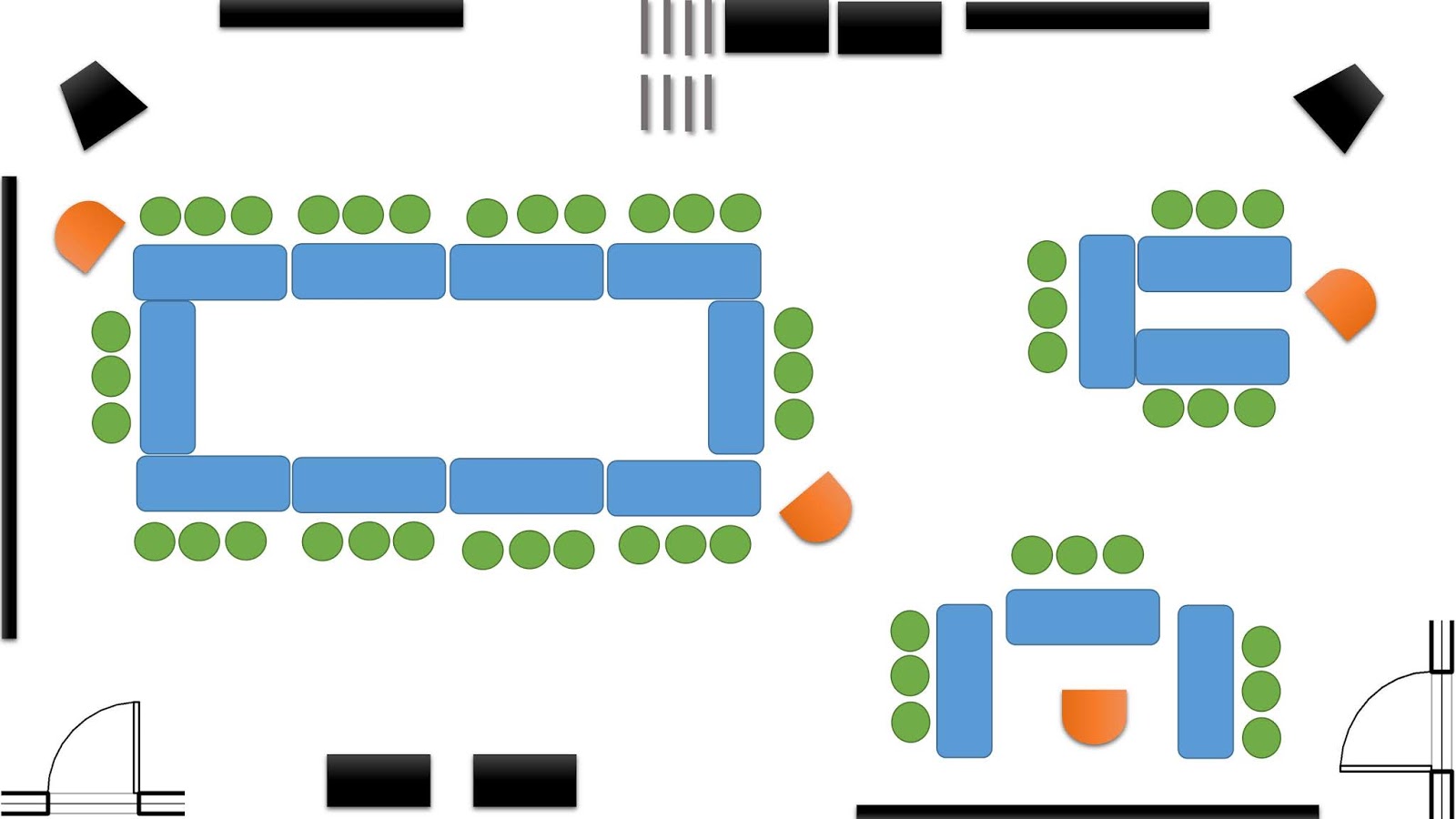
What if  . . . collapsible walls allowed for the expansion of learning communities, team teaching, and cooperative learning?

What if more institutions adopted the structure of learning communities, team teaching, and cooperative learning?  What would that look like?  One idea is to utilize one specific design element, the folding wall room divider, and one specific logistical consideration, block scheduling of students and faculty.


This solution requires each participating faculty member, in this case two, to teach two back-to-back sections of their class while their partner does the same. Classes happen concurrently. Students take one class, then the other, while their counterparts take the same classes in reverse order. As the semester progresses and the course materials begin to merge, the room divider can be opened, allowing for the faculty members to team teach for the day, both class blocks, perhaps offering lecture materials to the entire group, or perhaps allowing students to merge into large groups to brainstorm or collaborate on project-based learning assignments. The room can be arranged into areas that allow for faculty to mentor, meet, or otherwise assist individuals or groups of students. The room would allow for visitors, including community members and guest speakers, panel discussions, debates, and a whole host of collaborative learning activities.


What if . . . we opened our classrooms to community members as guest speakers?


The possibilities greatly expand, in this scenario, for facilitating the creation of working relationships among students, among faculty, and between students and faculty. These types of relationships increase engagement and student achievement, as faculty are able to become part of students' figurative and quite literal, circles.

What if . . . this is an option worth exploring? 


To read more about teaching and learning, try


Copyright Amy Lynn Hess. Please contact the author for permission to republish.

Tuesday, May 15, 2018

Active Learning Classroom Design and Pedagogy

Lithograph of Faraday delivering a Christmas lecture at the
Royal Institution. 
Maybe we've been doing things this way for too long? 

Active learning classrooms are spaces designed with student achievement in mind. As active learning is student-centered, so must the classroom reflect that orientation. The furniture is often mobile, designed with castors, making it possible to easily create tables for small groups of students to work together on projects, or to rearrange the set-up quickly for one-on-one meetings, speakers, or class discussions. Active learning classrooms are also equipped with all the technology necessary for faculty to seamlessly monitor student work, and for students to have at their disposal the tools and technology they might need to complete cooperative learning, experiential, service, project-based, or problem-based assignments. Active learning classrooms help shift the focus from the professor and the traditional lecture to the students and their peers.

To Assess by Sitting Down Beside

One key idea is to assess student learning and student progress from close up, as opposed to from "Faraday's stage," and as Dr. Ronald Purser reminds in his Problem Based Learning overview (n.d.), that requires sitting down with the students and observing them sitting down with one another. “To Assess,” he begins: “The Latin origin of this term, assidere, literally means to sit down beside. Another way of thinking of assessment is to use careful judgment based on the kind of close observation that comes from ‘sitting down beside.’” As opposed to outcomes-based assessment or assessment for the purposes of accreditation or program review, which too often ties faculty to sitting down with data instead of students, this real time assessment helps faculty keep students on track throughout a semester. This allows for real time improvement of the curriculum, and therefore greater engagement and student achievement.


The Learner-Centered Teaching Philosophy

Well known for her expertise in the field of active learning and active learning spaces, Diana Oblinger explains the importance of the pedagogy-design connection by simply stating that “Learning spaces convey an image of the institution’s philosophy about teaching and learning” (2005). These spaces are particularly important, then, for institutions looking to focus on learners and to engage underserved populations and minorities, as research made popular through the Yale Center for Teaching and Learning clearly shows. For example,


  • Active learning "has been empirically shown to decrease the achievement gap for underrepresented minorities and first generation college students, particularly in STEM fields; to reach 'a diversity of students'; and to build 'higher- order thinking skills' across engaged student populations" (Handelsman, et. al, 2007). 
  • "Active learning therefore can help improve class climate by promoting interconnections between students, which can enhance the sense of belonging and motivation for marginalized students and those with differing levels of academic preparation."
  • "Early quasi-experimental research revealed that teaching in an ALC can improve student attitudes, conceptual understanding, and passing rates, especially for female and minority students" (Baepler, et. al., 2016, Beichner 2007, Walker 2011).

Service and Experiential Learning

Benefits related specifically to service learning are reported by Yeh (2017) in Service-Learning and Persistence of Low-Income, First-GenerationCollege Students: An Exploratory Study. Her interviews with students gave “insight into the efficacy of service learning as a tool for improving college persistence,” which her framework equates with retention. Benefits related specifically to experiential learning are reported by Thacker, Berna, Torr, and Walsh in Experiential Learning: Benefits for Hispanic and First-Generation College Students (2017). They found that students in the studied experiential learning courses “report increased confidence, greater accessibility to and understanding of application of course concepts. And, perhaps of utmost importance, these pedagogical tools offer Hispanic, first generation students a lens through which they are able to view themselves as personally successful, intellectually empowered, and as productive community members.”

Summary

A shift from a  traditional lecture format to an active learning format of any type can often be challenging, but the benefits are innumerable. Active learning and active learning spaces often engage all students, including underserved populations, by offering them a chance to use soft skills and abilities that reflect the need for these same skills post graduation. Having spaces designed for this type of learning can make a great difference in bridging the gap between the two pedagogies, while at the same time proving an institution's commitment to student-centered learning.


Thursday, May 3, 2018

What's a Rhetorical Situation?


When writers write, they write to accomplish a goal related to an intended audience and a specific, narrowed topic. The way those three elements are mixed and matched is called the Rhetorical Situation. That means when writers write, they have to keep the Rhetorical Situation in mind from start to finish, or from prewriting to publication.

Three Parts of the Rhetorical Situation


Let's look at some examples of how changing the Rhetorical Situation changes how a writer writes, from the words the writer chooses to the citation style used to identify source content.


Example 1: Writing a Business Proposal


Intended Audience

When writing a business proposal, it's essential the writer understands the intended audience.  The person reading the document can make or break the business opportunity!  A banker will want to read about the financial acumen of the entrepreneur and will be interested in reading how the business will make enough money to pay back a loan. That information, therefore, will be essential, and it will need to be well researched in order to satisfy the level of knowledge of that banker, which is probably quite a high level of knowledge.  However, the banker will be less interested in reading an extensive list of sources on an MLA Works Cited page than perhaps a professor in an MBA program would be.

Narrowed Focus

That business proposal will need to have a narrowed focus, as well. A plan to open "some sort" of business will not impress the banker-reader. The banker-reader is going to want to know about a specific type of business, with a specific type of structure, located in a specific place.  The more details the writer provides, the more the banker-reader will be able to imagine the business operating on a day to day basis.  The writer will need to use concrete language and provide details about all facets of the business's model.  On the other hand, if the plan's purpose is to attract a business partner, perhaps the goal is to brainstorm ideas with that person.  That partner-reader will require a different type of proposal than that of a banker-reader. A change in either the purpose or the reader changes the entire document!

Purpose, Mode, and Strategy

The purpose of any business plan is to persuade, which means the mode for this proposal must be the persuasive or argumentative mode of writing. Within that mode there are a few strategies the writer can use to organize information. First and foremost, the writer must investigate whether or not the reader provides a template for proposals.  If so, the template should be followed as closely as possible. If not, there are other strategies for organization that can be used, like the problem-solution strategy. Every piece of information in this mode, to meet this persuasive purpose, must be aimed at convincing the reader to do or believe in the writer's plan. The writer wants the banker-reader to offer a loan or the partner-reader to join in the process of creating and opening a business.

Example 2: Planning to Write about Gardening or Earthworms


The following video explains the Rhetorical Situation and how it's used to plan a project during the prewriting stage of the writing process. Again, if any part of the Rhetorical Situation changes, the entire document must change.


Want to read more about quality writing?  Try

Adding Coherence to an Essay
Write a Unified Essay
Using Specific Language


Copyright Amy Lynn Hess. Please contact the author for permission to republish.
Wednesday, May 2, 2018

What to Eat While Fighting Lyme Disease - Detox Soup

Amy's "Detox Soup" Makes a Great Breakfast

One of the hardest parts of my Lyme fight has been eating, both finding things I can make myself eat and finding things that meet my dietary restrictions. I am currently eating only sugar-free, gluten-free and dairy-free in order to help reduce the amount of inflammation in my neck, knees, hips, and digestive system.  


One simple, tasty meal I've been eating for several months for breakfast is what I call my "Detox Soup." It combines several ingredients that seem to help keep inflammation at bay.  Whether or not you need as much help as a Lyme patient might need to stay healthy and keep at fighting weight, the key here is that it is tasty, and I happily eat it almost every day before leaving for work. I get three servings from the recipe. It reheats on the stove in a few minutes and tastes just as great the next day and the next.

Amy's Detox Soup Ingredients and Substitutions


  • 2-3 Cups Chicken Broth, Bone Broth, or Vegetable Broth (I like Swanson's or College Inn chicken broth)
  • 1 Cup Uncooked Royal Select Rice Blend (affiliate link) or Jasmine Rice
  • 1 or 2 Cloves Garlic
  • 1/4 Cup Fresh Cilantro or Fresh Basil Leaves
  • 1 Stalk Celery
  • 1/2 Lemon
  • 1 Tablespoon Coconut Oil or 1/2 Can Coconut Milk for a Creamy Soup

Making Amy's Detox Soup


  1. Add 1.5 cups water to a 4 quart stainless steel pot, bring to boil and add rice, or follow directions for cooking your choice of rice.  
  2. Add pressed or minced garlic and other fresh herbs while the rice is cooking.  
  3. Add sliced celery while the rice is cooking. 
  4. Add coconut oil or coconut milk, stir, and cover.  
  5. Lower heat and simmer for 10 minutes or until the rice has absorbed most of the water.
  6. Once the rice is cooked, add 2-3 cups broth and increase heat to medium or medium high.
  7. Add the juice of 1/2 lemon and zest to taste.
  8. Once the soup boils for 3 minutes, remove from heat and serve or store leftovers in a glass or ceramic bowl.

Nutrition Information

I used the nutritional tool on MyFitnessPal to calculate the approximate values for this soup with my ingredient preferences at 3 servings.


If you need a tasty soup made to meet an elimination diet or dietary restrictions because of  inflammation caused by any number of diseases or conditions, give this soup a try and let me know how it goes! Of course, be sure to speak to your healthcare provider to make sure the ingredients and nutritional values in this recipe meet your needs.  Be healthy and heal well!

Want more recipes?  Try

Mizeria: Dairy Free Cucumber Salad
Easy Cauliflower Soup
Cheesy Kale Salad with Almonds and Blueberries


Tuesday, May 1, 2018

Punch Needle Embroidery Supplies for Beginners

Embroidery punch needle and supplies
The Boye "I Taught Myself to Punch Needle" is a great value kit for getting started with needle punching!

Needle Punch Embroidery

Needle punch embroidery is a type of embroidery that mimics the look of a hooked or punched rug.  The main tool to use is a punch needle, a hollow needle that allows thread, floss, or fine yarn to pass through and leave a loop on the opposing side of the fabric, usually weaver's cloth (affiliate link) or a 14 or 18 count Aida.  As for a frame or hoop, it's essential for punch needle projects to use a locking or no-slip hoop (affiliate link) or frame - the fabric needs to remain drum tight as it's punched. Lastly, some people prefer to use a design or pattern that comes with the necessary fabric and floss. There are an overwhelming number of choices for supplies online, and the punch needles sold online range in price from about $3.00 to $20.00. Most come with the extra long threader needed to thread the needle.  It's hard to tell when shopping online, though, exactly which needle to buy, and putting together a beginner's kit can be a bit confusing.

Because I already crochet and have several balls of Aunt Lydia's #10 crochet cotton, I wanted to start with a needle and fabric that would accommodate the size of my crochet cotton. In order to really see the sizes of the needles and fabrics, I needed to go to a real store.  In my area there are three options for craft supplies: Michael's, Hobby Lobby, and Walmart.


Michael's Dimensions Punch Needle

The punch needle available at Michael's is the Dimensions needle, which is not adjustable, nor does it have interchangeable needles.  I did not purchase this needle, but if you'd like something simple and inexpensive, these Dimensions punch needles are also available on Amazon (affiliate link).  It is inexpensive, but it does not come with all the supplies needed to get started. A no-slip hoop, fabric, and floss, thread, or yarn, will still need to be purchased.

Hobby Lobby Artiste Punch Needle

The Artiste punch needle available at Hobby Lobby is adjustable and has interchangeable needles. At $16.00 (with tax), it is a few dollars less expensive than the Ultra punch needle, one of the best selling and most highly rated needle punches sold online. Like the Ultra, it comes with various sizes of needles, small, medium, and large, that can accommodate up to 6 strands of embroidery floss, fingering yarn, or crochet cotton.  Again, however, this needle does not come with the other supplies necessary to get started: It does not even come with instructions, so if you opt for this needle, be prepared to  find instructional videos and documents online.

Walmart's Boye Punch Needle Kit 

The Boye "I Taught Myself to Punch Needle Kit" (affiliate link) comes with not only the punch needle, but the locking hoop, patterns, and an instructional booklet with ideas for projects. I picked mine up for around $10.00, and picked up some embroidery floss and 14-count Aida fabric while I was there.  With the locking hoop that came in the kit, I was able to get stared on a project right away without the frustration of a loose project. Although this particular Boye kit comes with only one size needle (2 mm, the equivalent size to the large needle on the Artiste punch needle), I was able to easily use my crochet cotton and 6 strands of embroidery floss on the 14-count Aida. If I want to add to my needle sizes in the future, Boye also sells a needle kit that comes with three needle sizes.

Beginner's Punch Needle Shopping List

To review, in order to get started with needle punch, you will need a few special tools.

  • A punch needle
  • Weaver's cloth or 14 or 18-count Aida
  • A no-slip hoop
  • Thread, floss, or cotton, depending on your chosen needle size
  • A pattern kit or a healthy imagination


My recommendation is to start with the Boye "I Taught Myself to Punch Needle Kit," which will get you an inexpensive starter's kit that can easily be added to in the future.

Want to read more product reviews? Try

Needle Felted Alpaca Kit
Which Weaving Loom is Best for Beginners?
Are Adult Coloring Books Worth the Money?


Copyright Amy Lynn Hess. Please contact the author for permission to republish.


Wednesday, November 15, 2017

Creative Nonfiction: Types, Examples, and Readings for Additional Study

One type of creative nonfiction is the personal essay,
which combines the claim of a thesis with personal observations
and a first person point of view.

All stories, all narratives, have narrators. Sometimes those narratives are fictional, and as readers we accept that the narrator, then, is also a fictional character who has knowledge of the events being told. At other times, narratives are the stories of real events from a writer's flesh-and-blood life. We call those types of narratives nonfiction. When a nonfiction story is told to readers by the author-as-narrator, and that author has told that true story in an artful manner, we call the genre of that piece of writing creative nonfiction. 


There are different forms creative nonfiction can take, and mostly we determine that form based on either the tension between truth and artfulness, or the scope of the subject or topic. Three types or kinds of creative nonfiction worthy of study, though a limited list, include memoir and personal essays, journals, and even some forms of journalism.

Memoir or Personal Essays

Janet Burroway, author of an oft-used creative writing text called Imaginative Writing, defines memoir as "a story retrieved from a writer's memory, with the writer as protagonist" (391). She defines memoir in relation to personal essays, and her definitions set up a sort of continuum. To the left sits memoir, with its topic narrowed to a story that clearly revolves around events from the writer's past and is an effort to better understand those events. To the right sits the personal essay, also told from the writer's point of view, but perhaps an "intellectual examination" or more likely an avenue for the writer to communicate ideas to a reader (227-228).  As with any continuum, there are many works that fall between the far left and the far right.

Examples of memoir are fairly easy to come by, and the popularity of memoir-based graphic novels (or "commix," as Art Spiegelman might say), makes that particular form particularly interesting. Fun Home, 100 Demons, Persepolis, Blankets, March, and Maus are all memoir-based graphic novels worthy of study, and there are more to choose from than those listed here.

Professional personal essays are more difficult to find, but are often assigned as a type of essay representative of the narrative mode of writing in composition courses. Many editorials can also be categorized as personal essays. Some contemporary writers worthy of study include John Leo, Sherman Alexie, and Marilynne Robinson.

Journals

In an article entitled "Journal as Genre and Published Text: Beat Avant-Garde Writing Practices," Jane Falk examines what she calls a “marginal genre,” the journals of several of the Beat writers. She looks specifically at “Kerouac's Book of Dreams, 1961; Snyder's 'Lookout's Journal' published in Caterpillar, 1968 (reprinted in Earth House Hold, 1969); Ginsberg's Indian Journals, 1970; and Kyger's Desecheo Notebook, 1971” (992).

Especially interesting, Falk offers a succinct overview of Kyger’s journal and its publication, making note that it lost something of its artistry by being published, but that the publisher found ways to retain its authenticity as a journal (998). The tug-of-war between truth and artfulness was clearly won by "truth" when helped along by the publication process. However, both truth and artfulness remained of vital importance: Kyger's work did retain its original line breaks and almost poetic forms while showing a "commitment to quotidian or commonplace events" (999).

The opposing view to this, of course, is the contemporary idea that journals are unfinished and unsuitable for publication; a way to express inner thoughts without the pressure to share what has been written. This, perhaps, has its cause in student concerns over privacy or polish, or a concern by publishers as to the relevance of journals in the age of blogging. Nonetheless, published journals that retain both artfulness and truth are excellent examples of creative nonfiction.

Journalism

As with journals, journalism can also sometimes strike a balance between truth and artfulness. Like writers of personal essays, journalists also focus on communicating effectively with a reader. The New Journalists, specifically, also write autobiographically, much like writers of memoir.

One well-explained example of journalism as creative nonfiction comes from Jason Mosser in his text The Participatory Journalism of Michael Herr, Norman Mailer, Hunter S. Thompson, and Joan Didion: Creating New Reporting Styles. New Journalism is explored extensively in the text, but defined most simply by Mosser as "a hybrid of news writing and creative writing" (2). In his examination of Joan Didion, Mosser refers to her as "direct participant and narrator" (206), then succinctly analyzes a passage from Salvador, pointing out both her use of literary techniques and her reluctance to accept the certainly of any event without bearing witness (207). We see in Didion's work, as Mosser points out, the artfulness of literature combined with the autobiographical style of memoir. At the same time, Didion's intent to communicate her "intellectual examination" of a real event to her readers remains as fixed as her intent to communicate the real event. Her work comes to us as evidence of both participation and literary journalism.

Whether the continuum by which we gauge creative nonfiction is that what falls between art and truth or a focus on self examination versus an intellectual exploration explained to an intended audience, creative nonfiction is a prevalent and worthy genre; worthy of both analysis and attempts at craft.

Works Cited


Burroway, Janet. Imaginative Writing: The Elements of Craft. 4th Edition. Pearson, 2015.

Falk, Jane E. "Journal as Genre and Published Text: Beat Avant-Garde Writing Practices." University of Toronto Quarterly, no. 4, 2004, p. 991.

Mosser, Jason. The Participatory Journalism of Michael Herr, Norman Mailer, Hunter S. Thompson, and Joan Didion: Creating New Reporting Styles. The Edwin Mellen Press, 2012.


Copyright Amy Lynn Hess. Please contact the author for permission to republish.


Wednesday, October 11, 2017

Needle Felted Alpaca Kit Product Review

Make a Needle Felted Alpaca!

Needle felting has gained enough popularity in recent years to have encouraged craft supply companies to create easy-to-complete kits. Dimensions kits, available online and in craft supply stores, has several kits available, including kits for making animals in molds or without molds.


Included Needle Felting Supplies

The alpaca kit by Dimensions comes with everything a crafter needs to create a finished felted animal without a mold. I chose this kit because of its reasonable price and because the supplies were all included.  I was able to get started without worrying about whether or not I had purchased all the right supplies or the right amount of wool: The kit includes just the right amount of wool, a felting needle, a small piece of dense felting foam, an embroidery needle and floss, and basic instructions with measurements.

Basic Instructions Included

Needle Felting Measurements
As a complete beginner, I was able to successfully complete the project in about four hours.  I found the instructions sufficient for making the alpaca, but I did read a few "basics of needle felting" posts online after starting.  I recommend anyone starting any kit read ahead before beginning a sculpture. Some of the great tips I learned could have helped me ensure my centers were well felted and I was using my needle properly, pushing it into the sculpture far enough to use all of the barbs on the needle; slowly, but surely, wins the race when needle felting.

One excellent benefit of the instructional sheet was the included measurement charts. I was able to compare my shapes to the 1:1 shapes in the instructions to be sure I was on the right track.

Dimensions Needle Felting Kit Pitfalls

The most difficult part of the process was making and attaching the ears for the alpaca. A very small amount of wool has to be folded into shape and felted for quite some time.  Because the ears are flat and the foam is dense, I was not able to take advantage of all the barbs on the needle as was recommended. Honestly, the ears seemed to take forever, but I persevered . . . after a long break and some more online reading about how to make ears.

The Finished Felted Alpaca
Most importantly,  I only stabbed myself with the felting needle once.  However, because of the danger involved (I did bleed copiously), I would not recommend this project for a child unless the child wears finger protectors of some sort. As a matter of fact, because I enjoyed this project so much and plan to do more needle felting, my next order from Amazon will include a needle felting tool kit that includes finger protectors, a nicer felting mat, and additional felting needles of various sizes. Having these tools ahead of time may have made my project go a bit more smoothly, but I still had an excellent, successful afternoon with this kit, and in the end I made a brand new felted friend.

Want to read more about arts and crafts? Try


Friday, August 25, 2017

Sentence Diagramming - Diagramming Determiners

A Reed Kellogg sentence diagram for How much wood could a woodchuck chuck if a woodchuck could chuck wood?
A woodchuck would chuck as much wood as a woodchuck could chuck if a woodchuck could chuck wood.

What is a Determiner?


A determiner is a word or phrase that modifies a noun that cannot be counted.  In this post's first example, the interrogative sentence "How much wood could a woodchuck chuck if a woodchuck could chuck wood," the determiner is "How much," and the noun it modifies is "wood." Although we may be able to count logs, which is another word for wood, we cannot count wood.  We can say "There are 3 logs," but we would not say "There are 3 woods."

How Do I Diagram a Determiner?


Because "How much" modifies "wood" in the first clause of this sentence, it is diagrammed on a diagonal line under the word "wood," which is the first clause's direct object. It's diagrammed like any other modifier.

Would you like another example?

Another uncountable noun is "love." We may be able to count Valentine's Day cards, but we cannot count "love." "Endurance" is uncountable, too, just like "courage" and "fear." Could you diagram the determiner for "fear" in the following sentence?  "She had some fear about her new school, but she showed courage on the first day."


Don't let the length of the sentence throw you off.  Simply pick out the clauses and prepositional phrases, first, then diagram the subjects and predicates.  You can save the modifiers until last, which will include any determiners. In this case, the modifying word for "fear" is "some."

Can you think of any other non-count noun and determiner combinations you'd like to see in diagram form?  Let me know in the comments!

Want to read more about diagramming sentences? Try

Gypsy Daughter's Sentence Diagramming List
Gypsy Daughter's Sentence Diagramming Book


Monday, August 7, 2017

Lyme Disease and Aromatherapy: Rocky Mountain Trail Essential Oil Blend

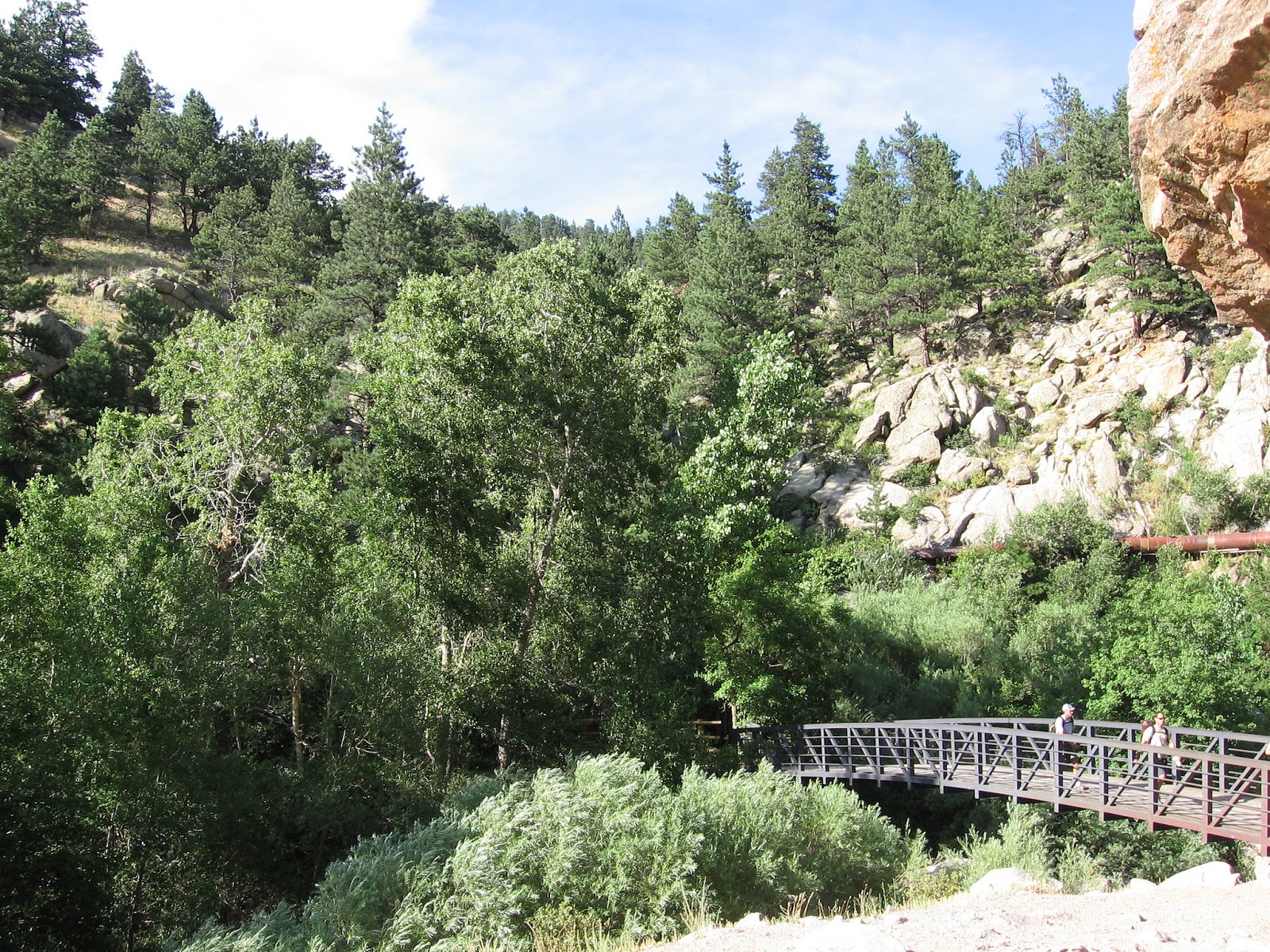
Hiking near Boulder, Colorado

I was recently diagnosed with Lyme Disease.  Part of the effect of the antibiotic treatment includes the release of endotoxins by the microbes as they begin to die: Those microbes and endotoxins, in addition to making me hurt everywhere all the time, cause hormone imbalances that cause severe mood swings.  


Sadness and Frustration 

To be clear, the swings of sadness and frustration I am feeling are probably more to do with my lack of physical energy, which has caused me to be homebound for the last few weeks in a dirty home, as I have not had the time or energy to do much of the cleaning I normally like to do.  The depression, itself, however, goes deeper and causes irrational feelings of hopelessness, anxiety, and worthlessness, or even hours at a time of complete apathy and emotional numbness.  The feelings, or lack of feeling, comes and goes in waves, luckily, so I "snap out of it" as the day goes on and feel like myself in the late afternoon or early evening - before I take another antibiotic, and it starts all over, again.


Fear

Native Cactus near Boulder, Colorado
One thing that is persistent, however, is my fear that I will never again be able to enjoy the outdoors like I once did for fear of being reinfected. Once I take my morning antibiotic, I know that for the next several hours I am going to experience the physical and emotional effects of the microbes and endotoxins, and that my fear is going to grow over the course of the day until my body can catch up on eliminating the toxins causing my reactions. Although there isn't a whole lot more I can do to quickly eradicate the microbes and their toxins, I can combat some of that daily emotional upheaval with aromatherapy via my oil burner. Specifically, I think I have perfected a blend that reminds me of one of my most favorite places in the universe, the wooded mountain trails near Boulder, Colorado.


Aromatherapy Outdoor Blend: Rocky Mountain Trail


I use an oil burner that has been saturated with my own Thieves Blend over the course of several years, which adds a hint of cinnamon and clove to all of my aromatherapy recipes (and helps cleanse the air). If you do not have a Thieves Blend, simply add a one drop each of cinnamon, rosemary, clove, and lemon to this recipe.

5 drops Cedarwood Oil
3 drops Pine Needle
3 drops Eucalyptus
2 drops Jasmine

This particular recipe utilizes all three, top, middle, and base notes for a great balance. Because it is an oil burning recipe only (not meant for skin contact or ingestion), there are few risks for side effects.  It simply helps me relax by reminding me of a place and time that made me happy.

Medical Care 

Boulder, Colorado, 2007
If you are new to aromatherapy, please be sure to research the effects of any oil that's unfamiliar to you - just in case.  Remember to wear gloves, if you aren't using pipettes, to be sure there is no skin contact with any of your aromatherapy oils to prevent irritation.  Of course, you should also talk to your doctor, LLMD, integrated medical practitioner, or herbalsit if you have any questions or concerns about your Lyme treatment symptoms or using aromatherapy, especially if the symptoms seem to be worse than you can handle. Although aromatherapy is a great addition to your care, it is definitely no substitute.


Be well,
Amy


Copyright Amy Lynn Hess.  Please contact the author for permission to republish.

Using ChatGPT for Essays in English Composition Classes

The best essays are written by people for people. "Corona Typewriter" image courtesy of the author ChatGPT and other AI language g...