Welcome!

Do you have APA formatting questions? Thesis statements got you down? Need to study grammar? Need some help with critical thinking? Having trouble with literary analysis or research? Want to take a look at some example essays? Well, I probably have a post here somewhere that can help you. Please use "Search This Blog," the "Labels," or my "Blog Archive" to help you find what you need. Have questions about what you find? Please feel free to comment or ask questions. I do moderate comments, and I try to respond to all topical questions and comments in a timely manner.
Showing posts with label Personal and Professional Development. Show all posts

Wednesday, September 22, 2021

Illustrated Maps: A Cartography Project


Hand Illustrated Map of Manhattan by Kening Zhu
Hand Illustrated Map of Manhattan
by Kening Zhu
Used with CC License
Some of my favorite types of artwork to scroll through online are illustrated or cartoon maps. They remind me of the map I picked up in the student center when I first moved to college. One side depicted the campus, mostly green with grassy areas and tree-lined campus paths, with each building on campus illustrated in an outlandish, yet aesthetically pleasing, perspective and scale. The reverse side was the entire city, covered with illustrations for local bars, coffee shops, restaurants, off-campus book and comic shops, thrift, and specialty stores. The names of the roads were impeccably hand-lettered, and the legend clearly labeled all of the important places, like the hospital, the police and fire stations, and the public parking areas. The map was gridded and included lists of places by name and grid identification. The compass rose was cleverly and artistically incorporated into the wooded area to the south of town. 

I picked up that map over twenty years ago, and I can still picture it clearly. It made an impression. That map represented my home, new at the time, but familiar after my five years of undergraduate courses. I used it and wore out its seams. I walked it and made mental notes. 

I suspect there's a lot I can continue to learn about myself and my ever-changing definition of "home" if I attempt to map and remap, both physical and metaphysical aspects, of wherever I might be at any given time.

Step One: Defining "Home"

The first step in this personal cartography project is to define "home," and not just by opening Webster's Dictionary. The lock-making company Schlage makes a point of defining home outside the boundaries of the dictionary in a 2020 blog post entitled "What is the meaning of home? Hint: It’s not just a place." This post specifically juxtaposes the Merriam-Webster definition: Home isn't just a "residence," "domicile," or "house," they argue. Instead, the post defines it as "the intangible feeling" a person might experience in a specific place, "a sense of peace, joy from loved ones or an environment where everyone knows they’re welcome." They go on to include several definitions of home that extend far beyond the dictionary definition.

"Home" is also not always delineated as simply as my introductory map example might suggest. "Home" is complicated. "Home" often includes, but is not limited to a house, per Webster's, and at the end of the day when someone says, "I'm heading home," they might mean their house. However, if someone was going on vacation, they might also respond, "I'm heading home," but mean the place where they grew up. This might be entirely different from where a person feels most "at home." For some, a special place in the woods where they first went camping feels the most "like home." For others, their grandparents' property most fits their definition of "home." Although very rarely just a single house, "home" might evoke a collage of houses, all linked by the roads and bridges and telephone lines that keep a family connected. "Home" might be a hotel room or a specific aisle in a specific library. "Home" might be a neighborhood or college campus. Some "homes"  have no boundaries at all, and when asked, a person might tell you the world is their "home," or wherever they currently live is their "home."  Some people, on the other hand, have no answer ready and haven't considered the question until asked. Each response depends entirely on a person's experiences in the world and their reactions to those experiences, both positive and negative.

Step Two: Narrowing the Topic

After defining "home" based on personal experiences, the second step is to narrow the scope of the cartography project. 

Just as when narrowing a writing topic, the scope of a map can be narrowed by choosing an intended audience. For example, if the intended audience is "family members," including the homes of all the family members would be important, so the boundary of the map should encompass all the homes. The intended audience might also be a group of friends who play a table-top role playing game together. Perhaps their "home" is a specific location or area on a fantasy map. A couple who takes a meaningful road trip might choose to map the path and places of interest as a memento for themselves.

A second way to narrow the scope of the project is to construct a theme or motif.  A meaningful map might include all places a person has kayaked, canoed, or rafted, especially if that person feels "at home" when engaged with those activities. A foodie might mark all of their favorite hometown restaurants on a map. A person living in a new place might take the opportunity to walk their new neighborhood and construct a map from memory afterwards to mark the occasion, or a person who'll soon be moving might want to construct a map of the place they'll be leaving. 

Step Three: Drawing and Labeling Places and Landmarks 

The third step of the personal cartography project requires ranking landmarks and places. 

"Home" becomes a matter of inclusion and exclusion as map-makers finish deciding where to place boundaries and begin to decide which places or landmarks will be included or emphasized on the map. A person's house may have prominence and be placed in the center of the map, or a series of places might be of equal importance and be drawn around a central point. Places that have more importance might be drawn larger than places of lesser importance. The importance of specific roads will determine the level at which the map is drawn, as well. If all important locations are on major roads, only major roads might be labeled. If some important locations are on minor roads or side streets, the maker will have to decide if labeling the side streets is important. The maker will have to decide the scale or "zoom level" of their map. 

Step Four: Taking Pencil to Paper

The final step of the personal cartography project is taking pencil to paper and making the map. 

It's worth pointing out that there are several reasons why a person may prefer a paper map to an electronic map, including that paper maps don't need to recalculate (Berendsohn). Beyond the pragmatic and practical reasons, however, the act of mapmaking on paper can be both a kinesthetic and meditative practice. 

After deciding which important landmarks and places will be emphasized and labeled within the confines of the boundary of the map, a maker must take pencil to paper and begin making the map. It can either be finished on paper, or electronically. After drawing out initial ideas, the map can be constructed isometrically using computer software or special drawing paper and tools. The map might be painted in watercolor, or it could be constructed using collage techniques. The map might be created using a vintage style, in fantasy style, or look more like a cartoon. It could be meticulously created in CAD. The decisions about the style and form of the map might be made based on pragmatic matters, like budget, skillset, and time constraints, or it might be more meaningful. For example, a watercolor map of places a person has made plein air paintings would be reiterative.
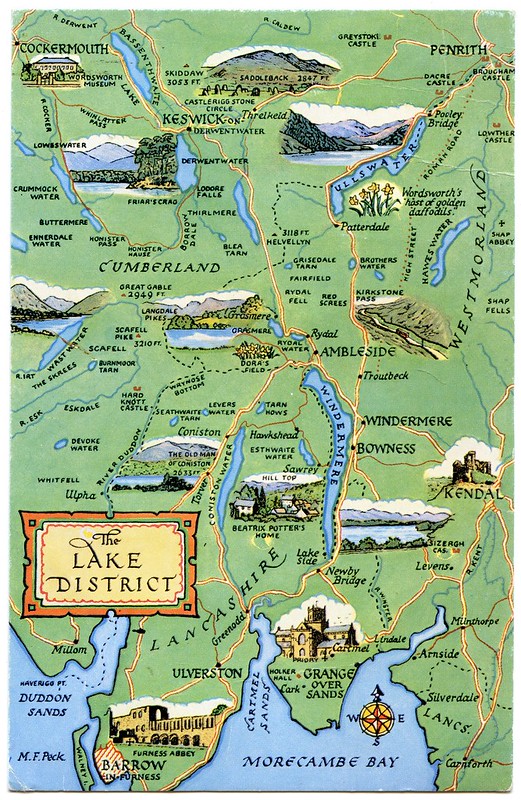
Postcard Map of the Lake District
Postcard Map of the Lake District 
Used with CC License
 I suspect there's a lot we can learn about ourselves if we attempt to map such a concept as "home."

The more I've travelled, the more of those same types of city maps I've encountered, like the one made for Mt. Pleasant Michigan that I picked up back in 1994. I've collected a number of similar-looking Discovery Map International tourist maps and MapCo Marketing event maps. I've drawn maps in art journals and even attempted postcard maps. Sometimes the map-making occurs spontaneously and I can think about my choices after the fact, and sometimes it's meticulously planned. Some have been successful, and others were simply steps in the process of becoming better - better at understanding myself, a better artist, better at remembering a place or how it evoked a certain feeling.

 Sometimes the maps evoke powerful feelings of home, depending on my affection for the city. However, the more important considerations are how I choose to define the map, its intended audience or purpose, and any thematic or meaningful principles. 

Each day might, in that way, bring a new map onto the page.

Works Cited

Berendsohn, Roy. "6 Reasons You Should Always Have a Paper Map." Popular Mechanics, 19 Nov. 2018, www.popularmechanics.com/adventure/outdoors/a25228379/paper-map/.

“What Is the Meaning of Home? Hint: It’s Not Just a Place.”  www.schlage.com/blog/categories/2020/11/meaning-of-home.html. Accessed 22 Sept. 2023.

Thursday, January 9, 2020

Divergent Thinking and The Power of "What If?"

How many uses can you think of for a paperclip? 
What if that paperclip were 50 feet long and made of foam rubber?

Divergent Thinking

Divergent thinking is a skill related to creativity, and whether folks realize it or not, they often use this skill; or they “use it or lose it,” as the case may be. One very famous study, for example, asked that kindergarten students think divergently about uses for a paperclip. 

The findings of that study?


Our capacity for divergent thinking deteriorates with age. A longitudinal study of kindergarten children measured 98% of them at genius level in divergent thinking. Five years later, when they were aged 8 to 10 years, those at genius level had dropped to 50%. (Abbasi)

People use divergent thinking when they think up “novel ideas,” sometimes based on ideas that already exist (“Divergent Thinking”). A cook might change up an old recipe, for example, or a fashionista might incorporate a new item into a current wardrobe. A student might fix his glasses with a paperclip if they break during class. There are many ways to exercise creativity and an ability to think divergently.

The Bucket List

An exercise similar to the paperclip experiment is listed in Ed Bell’s book, The 30-Day Creativity Challenge. In an exercise he calls “The Bucket List,” he asks readers to take ten minutes to list all the uses they can imagine for a bucket (2). Even better, he reiterates the definition and importance of divergent thinking: “Creativity is about taking existing concepts and ideas and doing something new with them” (2).

Playing "What If?"

One commonality between the paperclip experiment and Bell’s “The Bucket List” exercise is that the practitioner asks the student or reader to work alone. However, what if after the lists are created as a solo activity, people then work together to share experiences and expand their understanding of the problem? In this version of brainstorming, the groups or teams might discuss how they envisioned the bucket as they created their original lists, what it was made of, how big it was, how much water it held, or its condition. It’s very likely that each person’s imagined bucket is slightly different: Some might be plastic beach buckets, and some might be feed buckets, and others might be galvanized garden buckets, while others still might be wooden pails.

To expand the experience even further, the groups or teams can be asked to think of new “What if” scenarios for their buckets and generate more ideas for uses of those buckets:

·         What if the bucket was cut in half? Cut in half the other way?
·         What if the bucket held 1000 gallons of water?
·         What if the bucket was made of bread?
·         What if there was a hole in the bucket? How big is the hole?

The “What If” exercise can be an excellent starting point for discussion about the abstract nature of language (as students realize their idea of bucket is based on their own experiences, not inherently linked to the word “bucket”). The exercise can also be used to demonstrate the power of brainstorming within groups, or be used to point out the different types of energy required to work either alone or together. Furthermore, it’s an effective way to practice divergent thinking, and if people don’t use that skill, they will lose it.


Works Cited

Abbasi, Kamran. “A Riot of Divergent Thinking.” Journal of the Royal Society of Medicine, vol. 104, no. 10, Oct. 2011, pp. 391–391, doi:10.1258/jrsm.2011.11k038.

Bell, Ed. The 30-Day Creativity Challenge. The Song Foundry, Inc., 2019.

"Divergent thinking." Palgrave Key Concepts: Key Concepts in Innovation, Hamsa Thota, and Zunaira Munir, Macmillan Publishers Ltd, 1st edition, 2011. Credo Reference. Accessed 09 Jan. 2020.


Want to read more? Try


Copyright Amy Lynn Hess. Please contact the author for permission to republish.

Thursday, August 1, 2019

Healing Emotional Wounds: A Back-to-School Altar

A black bowl of salt water, 2 white candles, a clear quartz pendulum, a black cloth-covered journal, black stones from the shore of Lake Huron, a bowl of marbles in a bowl made by my father, aquamarine, jasper and hematite sphere, copper sphere, and septarian
A Shamanic Grief Altar

Authenticity, creativity, 
patience, and compassion.
Authenticity, creativity, 
patience, and compassion.

For the past 38 years I have loved the arrival of the first day of school. Whether as a student or as a professor, I've barely been able to contain my excitement about the potential of the new academic year, the new people I would meet, the friends I'd see at lunch, and the new knowledge that's inevitable in academia.


Not this year,  however. On the eve of the start of my 2019-2020 contract, I find myself a bit distracted, if anything, by other things. I want to paint my bedroom door and reorganize the shed. I want to wash my car and make Christmas presents and cuddle the cats. I want to watch cars go by in the rain and figure out which onomatopoeia words best represent the sound they make. I want to learn to play a shamanic drum. I want the freedom to withdraw from others at a moment's notice.

Is This Faculty Burn Out?

A Close-up of a rough aquamarine and jasper and hematite sphere nestled in black beach stones from Lake Huron
Rough Aquamarine and a Jasper and Hematite Sphere
After a series of serious obstacles and emotional upheavals over the past few years, I think I'm simply worn out. I feel translucent in the wake of personal tragedy, illness, and close calls, and I'm not quite convinced I have the energy to usher in close to 80 freshman and somehow convince them to write essays. Composition is not my favorite class to teach. It certainly isn't a student favorite, and they, too, are all very much distracted by other things. I also haven't, to be completely honest, forgiven my classes from last semester for calling and texting me while I sat and held my father's hand while he struggled to breathe in his last few days. They called to ask if I'd graded their exams while I was at the funeral home. They texted to complain about their group members as the hearse arrived. They emailed multiple times to see if I would accept work they hadn't completed in the first weeks of classes as I tried to sleep for the first time in days; for the first time in days not listening for the next breath. I answered all of them as soon as I could, but I can't seem to shake the feelings of resentment and martyrdom that came with it, no matter how many times I tell myself that they're still kids and don't know any better, or didn't know any better at the time.

 On top of it all, I've lost control of my verb tenses. My father didn't once love his cat and stop loving him, so I cannot say "He loved his cat." He left this world loving the cat in the progressive, continuous tense. I also cannot say "He loves his cat" with accuracy. As a grammarian, this lack of verb tense for deceased relatives is an absolute twist of the knife. What if my lack of control over verb tenses seeps into my classroom: Will the students notice? Will I be outed as a sentence diagramming charlatan? Perhaps I should use the conditional and subjunctive mood: "If my father were still here, he would love his cat."

Contemplating grammatical analysis is wonderfully distracting, but it is not for healing. My grief has taken a unique turn that requires unique healing.

The Shamanic Grief Altar

Off to School


A close-up of my father's marbles in a bowl he made in high school
Personal items are optional, in this case beautiful vintage marbles.
In "Off to School Altars," author C. B. Cabeen explains how their family used an altar to help a young daughter overcome her trepidation about returning to school. The author explains the playfulness required to make the altar-building process meaningful, especially with a young child, but also offers exceptional insights for people of all ages: "Altars give us a way to mark the changes in our lives, and they reveal our lives back to us as something sacred to honor and celebrate." The author goes on to say that "the process of choosing or creating emotionally charged objects, arranging them, and gazing on them opens up our abilities to see the broader picture and reach a synthesis–or at least start a conversation.  Disparate feelings can stand side by side on an altar without having to edge each other out."

On an altar, my own trepidation at returning to school can stand, as Cabeen says, side-by-side with my realization I need to be with others, regain a sense of community and control, and once again find joy in my life's work. As practical as the creation of a syllabus might be tomorrow, my first official day of the new school year, gathering and placing "emotionally charged objects" may help me commemorate the day in such a way as to bring healing and prepare my heart for the task at hand.

Healing from Grief


Authenticity, the product of mindfulness and a supportive community.
Creativity, because it contributes to the growth of our souls.
Patience with myself and others because we are all as fragile as soap bubbles.
Compassion above all else.


In addition to mourning the end of summer, I am grieving the loss of my father and all that entails for me and my family. Therefore, my altar is also based on the Shamanic grief altar. 

Linda L. Fitch teaches, in "Creating a Grief Altar: A Shamanic Practice for Grief and Loss," that the required items for a Shamanic grief altar are very few:

  • A black cloth (you can use a napkin, a scarf, a piece of fabric, etc.)
  • A black or dark blue bowl with water in it
  • Salt
  • One or two light colored candles

When the candles are lit, she continues, the altar is "open."

A close up of a copper sphere from Michigan nestled in black beach stones. A bowl of salt water and light candles sit on a cloth-covered journal
A copper sphere from Michigan's Upper Peninsula 
Although my altar sits on a woven Navajo mat, as you can see in the image, I've placed a black bowl of spiced salt water on top of a black, cloth-covered journal. The spiced salt was a gift for cleansing my home from a friend, and it seems appropriate to use the journal as my black altar-cloth for the start of the new school year, representational of a blank slate. I've included two white candles and a clear quartz pendulum, plus a small collection of jasper and a shell I picked up on the shores of Lake Huron. Not on the journal, where the basic items are located, but on the mat, I have included a bowl of marbles that belonged to my father, and they are in a bowl he made in high school. I've also created a spiral of black beach stones from home as the ground for a rough aquamarine, a jasper and hematite sphere, a copper sphere from the Upper Peninsula, and a rough septarian. Although I have a large collection of gemstones and minerals, these were the most appropriate for this altar's purpose: To help me heal and prepare my heart for the new academic year.


Want to read more about grief and healing? Try

Grief and Healing: Using the Nice Dishes
Arts and Crafts and Healing
The Intent to Change; The Purpose and Benefit of Personal Altars

Works Cited


Cabeen, C. B. “Off to School Altars.” Pagan Families, Patheos, 23 Oct. 2014, www.patheos.com/blogs/paganfamilies/2014/08/off-to-school-altars/

Fitch, Linda L. ""Creating a Grief Altar: A Shamanic Practice for Grief and Loss." http://lindalfitch.respond.ontraport.net/grief-altar


Copyright Amy Lynn Hess. Please contact the author for permission to republish.

Monday, July 29, 2019

The College Journal: Supplies on a Student Budget

Purchasing supplies on a student budget can be as simple as buying a mechanical pencil and some felt tip pens
The College Journal is Available on Amazon through This Affiliate Link

The College Journal is a one-stop-shop for all the types of journal pages a college student might need during a semester. It's divided into three areas: Academic Calendar, Weekly Reviews, and Dailies. Each area is already set-up with easy-to-use templates. Prompts for the templates appear in the Introduction, and additional prompts and ideas appear online - on this very blog, as a matter of fact!


What Supplies Do I Need to Start a Journal?

So, what else do you need to get The College Journal started? Depending on your budget, you can start minimal, something as simple as a mechanical pencil, or you might jump right into being artsy and buy yourself some laser-cut stencils and water colors. Of course, there are lots of options in-between.

Something That Writes (and Maybe Erases)

I would recommend starting with something that writes and erases. Lots of people jump right in with an ink pen, but sometimes mistakes happen, and being able to erase the mistakes and start over can lower any stress or anxiety you have about what you write or draw. Try a refillable mechanical pencil, which prevents the need for a pencil sharpener. This Pentel mechanical pencil comes with extra lead and an eraser.

If you're not terribly stressed about what you write and can accept that mistakes happen, try a black or blue gel pen, or give Micron pens a try. If you're environmentally conscientious, try a fountain pen or a roller ball with replaceable cartridges. Try a few pens before you buy too many, however. You want to avoid pens that bleed through the pages.

Add Some Color

If you want to add a little color to your journal, I recommend felt tip pens or colored pencils. These can either be used to add emphasis to your pencil-written work, or you can write with them as a way to organize your thoughts. Paper Mate Flair pens do not bleed through paper, and I can attest to it since I've been grading papers with them for several years. Crayola Twistables Colored Pencils, just like mechanical pencils, do not require a pencil sharpener, so they're easier to take with you and use if you like colored pencils. 

Another way to add color is with washi tape, stickers, or rubber stamps. There are a variety available in big box stores, office supply chains, and online.

and speaking of on line . . .

Making Lines

Last, but not least, you want to be able to add lines to your journal, especially when you're completing your pie graphs.


You can add a bookmark that can also double as a straightedge: Something as simple as an index card might work for you. You can also purchase a set of metal bookmark stencils or even use a protractor, especially if you want to carefully divide your pie graphs as exactingly as possible.

Whatever the additional benefits of keeping a journal, one of the most important and often overlooked is as an avenue for self expression. Whether you want to show off your abilities in a minimalist fashion or by using bright and colorful images and fancy lettering, it's your journal to do with as you see fit. There are supplies to match every budget and every personality.


Copyright Amy Lynn Hess. Please contact the author for permission to republish.


Friday, July 26, 2019

The College Journal: Ideas for Your Special Tracker

The College Journal is an 8.5" x 11" fill-in-the-blank journal specifically designed for first-year college students. It includes prompts and templates to help you raise your self awareness, take financial responsibility, and keep track of important deadlines, meetings, and assignments.
The College Journal is Available on Amazon through This Affiliate Link

The College Journal Dailies section is a place to keep track of your daily activities, both before the day begins and as the day is drawing to a close. At the end of a week or before a new week, depending on how you frame it, you will look back at your Dailies entries in order to look for patterns of behavior that can help you change bad habits and continue to act on beneficial habits. Realizations about how you spend your time, money, and energy can then become goals and action items you record in your Weekly Review.

The Dailies section includes a task manager and organizer, a blank graph for keeping track of how you spent your 24 hours of time, an area for a Button-Size Mini-Memoir, and a place to keep track of an additional "thing" of your choice. Because the Dailies are meant to be a fast, user-friendly journal experience (because students don't have a lot of free time in college), what follows are some basic tracker ideas for that special "thing"  that will fit into your Dailies pages.

What Kinds of Things Do I Put in My Journal?

Use Your Journal to Track Good Habits Versus Bad Habits

One way to think about your options for tracking behaviors and habits is to divide your tracker into two rows, one for the "good" and one for the "bad." You could track these behaviors for one week, or you could track them throughout your semester to look for changes.

Communication

In the example above, the student is tracking both complimenting others, a good habit, and swearing, a bad habit. Every time the students swears, that student fills in a stop sign. Every time the student compliments someone else, the student fills in a smiley face. In this example the compliments may not replace the swearing directly, but may simply improve the student's mood when there are more compliments than swearing.

Other good versus bad habit combinations related to communicating with others might be complaining versus offering solutions or gossiping versus getting to know someone.  In both of those instances, the healthy behavior may replace the bad behavior, so your tracker could be set up a little differently.
In the example above, the student colors a section to the left in black each time the student spends time genuinely and sincerely building someone up during the day. The student colors the right side of the tracker red if the student spends any time putting people down or making sarcastic jabs during the course of the day.

Health and Wellness

Some habits related to health and wellness might be meditating instead of arguing or stretching instead of slouching. Those can certainly be tracked like the examples above.

Additionally, your habits might include drinking water instead of pop, or eating vegetables instead of chips. If you want to track meditation, you could simply fill in the box with a before and after impression of the time spent in meditation.  If you want to be slightly more creative, you can draw glasses of water to color in blue for each glass you consume, or you can even try your hand at drawing the yoga poses or exercises you completed for the day.


Two different ways to track a yoga practice are shown in the figure above. You could simply list the poses you've tried with a simple decoration (or no decoration), or you can find a more colorful way to track your practice.

Lifestyle and Hobbies

A third way to think about your habits is in tracking your lifestyle and hobbies. Should you be spending more time studying and less time in the game room?  Or do you need to make sure you are practicing a skill or craft on a daily basis?  Try tracking your successes for a confidence boost!

There are two ways to track lifestyle and hobbies shown in the image below. The first is to draw or fill in one baseball to indicate feelings of accomplishment on a scale of 1 - 10. The second way is to create a musical message on a staff or fill in notes to indicate musical achievement and success.
The most important "thing" to remember about your special tracker of a "thing" is that it should be meaningful to you without being difficult or time consuming. It should never be considered a burden. Try tracking communication, health and wellness, or lifestyle and hobbies all semester or only for one week. Try a few different trackers until you find one that makes a difference in your life and offers real insight. If you gain helpful insights, you can write about them in your Weekly Review. 

Happy Journaling!


Want to read more about The College Journal? Try


Copyright Amy Lynn Hess. Please contact the author for permission to republish.


Thursday, July 25, 2019

10 Prompts for Freestyle Journaling: Using Your College Journal

The College Journal is an 8.5" x 11" fill-in-the-blank journal specifically designed for first-year college students. It includes prompts and templates to help you raise your self awareness, take financial responsibility, and keep track of important deadlines, meetings, and assignments.
An 8.5" x 11" Journal for College Students
The College Journal is Available on Amazon through This Affiliate Link
The College Journal is divided into three main sections and types of pages: Academic Calendar, Weekly Reviews, and Dailies.

The journal is pre-planned with templates and prompts on all the pages needed for 20 full weeks of classes.

One of the pages where you really get to be creative and make the journal your own is in the Weekly Review. Each of the 20 Weekly Reviews includes a page for Freestyle Journaling. 


What Kinds of Things Should I Write in My Journal?

If you need help getting your Freestyle Journaling pages started, listed below are 20 complete prompts that leave lots of creative wiggle room. The essential thing is to make the pages your own, finding a way to reflect who you are and what's important to you.


1. Use Your Journal to Dump Your Thoughts

  • One way you can dump your thoughts is by creating a mind-map or cluster. You may have learned how to do this in your Composition course as a method of prewriting. Try starting with "On My Mind" as the starting point for your cluster, and create your map as you work outward from that center. This can help you pinpoint what's causing your stress or help you prioritize issues that may need to be resolved. You can use "What I Learned" as a starting point for reinforcing lessons.
  • Another way to dump your thoughts is to write a letter to yourself. In your letter, explain to yourself what's been bothering you. You can even ask yourself for advice, which may prompt an answer in a future letter!


2. Use Your Journal to Reflect

  • If you already know what's been on your mind, you can take the time to reflect on it. You can paraphrase a conversation or summarize a situation in order to determine if you would change anything about the conversation or situation if you had the opportunity.
  • Another great way to reflect is to reflect on class discussions. If the class conversation introduced multiple perspectives, with which perspective do you agree and why?


3. Use Your Journal to Ask Yourself Questions

  • Have you been acting on bad habits, lately?  If you have, maybe you should ask yourself why you're acting on them and make a pact about what you could or should do instead.
  • Another great question to ask yourself is how you're feeling. There are a lot of emotion words in the English language to choose from, and there are even more in other languages that we don't translate into English. Spend time choosing the exact word that most closely describes your current feeling. Explain the word's history and meaning using an etymological dictionary.


4. Use Your Journal to Plan a Party

  • If you could plan a gratitude party, what would it look like? Who would be there? What would be on the menu? What types of activities would you plan, and what kind of music would you play? Have fun with this prompt.
  • Now plan a party for someone you love. Think about all the ways you could make that person happy with your party planning choices. Better yet, how could you plan a party for someone you dislike in order to make that person happy?


5. Use Your Journal to Learn New Words

  • There are several "Word of the Day" Web sites and email subscriptions. Join one for at least a week and record the new words in your journal.
  • Alternatively, jot down words you encounter while reading, record the meanings and context, and keep them in your journal.


6. Use Your Journal to Make a Shopping List

  • Let's say the impossible has happened, and you have won 10 million dollars. Make a distribution and shopping list.
  • On the other end of the spectrum, if you only had $10.00 a week to spend on food, what would your shopping list look like. Investigate food prices and try to be as healthy as possible.


7. Use Your Journal to Create a Reading Log

  • Make a list of books and articles you want to read. Make a little note explaining why you want to read each one.
  • Make a list of books and articles you have to read. Make a little note explaining what you might expect to learn from each one.


8. Use Your Journal to Create a Watch List

  • Make a list of all the movies and shows or videos you want to watch. Make a little note explaining why you want to watch each one.
  • Make a pro and con list for watching a show you're on the fence about watching. The pro list is why you should watch it, and the con list is why you should not watch it. Which side has the strongest reasons?


9. Use Your Journal to Take Notes

  • Watch a documentary and take notes. Write down interesting quotes, follow-up sources, interesting points for additional research, and talking points (what you'll tell your friends about the documentary).
  • Choose one of the items from your reading list and take notes. Write down information about the item, like the author and date, and use a citation style appropriate to the subject to document the source. Reiterate main ideas that caught your attention if it is a nonfiction item, or try to capture the theme if it's a work of fiction or literature.


10. Use Your Journal to Record Your Feelings or Memories

  • Draw a self portrait. You can look in the mirror or work from a recent selfie. Try, most importantly, to capture your mood.
  • Write or illustrate a narrative from the week. Did you drop your tray in the dining hall? Did you find money in clothes you haven't worn in a long time? Write it out like a story with dialogue and detailed description, or draw it like a comic strip.


Summary

The Freestyle Journaling page is introduced as a space to dump your thoughts, reflect, ask yourself questions, plan a party, list new words, make a shopping list, create a reading log or watch list, take notes, or record feelings and memories. However, if you need more help getting started, these 20 prompts can certainly help.

Happy journaling!

Want to read more about The College Journal by Amy Lynn Hess? Try

The College Journal: Creating a Weekly Budget
The College Journal: A Fill-in-the-Blank Journal for First Year College Students
The College Journal: Ideas for Your Special Tracker
The College Journal: Supplies on a Student Budget

Copyright Amy Lynn Hess. Please contact the author for permission to republish.


Tuesday, July 23, 2019

The College Journal: Creating a Weekly Budget

The College Journal is an 8.5" x 11" fill-in-the-blank journal specifically designed for first-year college students. It includes prompts and templates to help you raise your self awareness, take financial responsibility, and keep track of important deadlines, meetings, and assignments.
The College Journal is Available on Amazon through This Affiliate Link

Should I Keep a Budget in My Journal?

Absolutely! Creating a budget, one week at a time, can help students who've never created budgets before start thinking about financial goals and responsibilities.

The College Journal includes template pages for Weekly Reviews, and one of the prompts in the Weekly Review asks students to gather receipts and bank statements from the previous week to help them create a budget for the following week.  Especially helpful for visual learners, the prompt is accompanied by a pie graph template for the budget. 

Each student budget will be unique because each budget must take the student's income or money available for spending into account. 

How to Create a Weekly Pie Graph  Budget

Determining Weekly Income

As stated previously, a budget requires a knowledge of both income and expenses. A student generally receives income by paycheck, allowance, financial aid, or through savings. When income arrives once a month, then that income must be divided by the number of weeks in a month (4) in order to determine how much income the student has per week. If income arrives once every nine months, as may be the case if a student receives financial aid during the academic year and works in the summer, then the income must be divided by the number of weeks per nine months in order to determine a weekly income (36). In some instances, income will come from a variety of sources, like financial aid, work-study, and savings or allowance.

Determining Weekly Expenses

Weekly expenses for a week may be categorized as simply "savings," "food," and "gas." However, some weeks may include "rent and utilities," "entertainment" (like going to the movies), special "school supplies" for projects, "textbooks," or even "medical appointments" or "medication." By planning for the upcoming week, students can learn to schedule when, how, and how much income is spent. 

Using the Pie Graph

Once income and expenses for the following week are determined, the budget can be drawn into the pie graph template on the Weekly Review page. First, divide the pie graph into divisible areas with a pencil. If your income is $340.00, for example, each 1/4 of the pie graph equals $85.00. Alternatively, use percentages to determine how much of your income is being used for each expense, and divide the pie graph by percentages, like the example below. If your portion of the rent is $300.00, that is 88% of your weekly income. 

Feel free to work ahead on your pie graphs (in pencil) if you prefer to work out your budget for the entire month instead of one week at a time. You could also keep a list of your weekly or monthly expenses and bill due dates as one or more of your Freestyle Journaling entries. Lastly, one of your daily entries might be a "savings tracker," in case there's something you need or want in the future (like an out-of-town trip, a formal dress, or car repairs).


Raising Awareness

Some expenses will be inevitable, like rent and medications, while others might be "wants" and not "needs." In order to raise awareness of financial responsibilities, you should make as many notes in the margins as possible or necessary.  This can help with planning for future weeks or even for reminding yourself of important lessons learned. For example, you might write down what you want to do with your paycheck the following week before you forget: You need school supplies for a project (will cost about $34.00), you have a date to go to the movies (about $17.00), and you have a dental appointment with a copay ($30.00). 

Notes or not, the most important part of tracking your finances is that you are tracking your finances and learning more about where your money goes so you can make better and more informed financial decisions each week.

Want to read more about The College Journal? Try


Copyright Amy Lynn Hess. Please contact the author for permission to republish.


Monday, July 22, 2019

The College Journal: A Fill-in-the-Blank Journal for First Year College Students

The College Journal is an 8.5" x 11" fill-in-the-blank journal specifically designed for first-year college students. It includes prompts and templates to help you raise your self awareness, take financial responsibility, and keep track of important deadlines, meetings, and assignments.
The College Journal is Available on Amazon through This Affiliate Link

The College Journal is an 8.5" x 11" fill-in-the-blank journal specifically designed for first-year college students. It includes prompts and templates to help you raise your self awareness, take financial responsibility, and keep track of important deadlines, meetings, and assignments. 


Is it Hard to Keep a Journal?

Keeping track of life during college is hard, but writing things down can make it a bit easier. The hard part is establishing a writing habit and knowing what to write down and how often. This journal is already planned, includes fill-in-the-blank pages with prompts and templates. This is a quick and painless way to help you stay on top of your to-do list and gain useful insights about your time, money, wellness, and academic responsibilities.


After you complete the initial set-up for your semester’s dates, you might spend between 10 and 30 minutes on your journal each day, depending on the depth to which you choose to use your journal, how pretty and colorful you want to make it, and how exactingly you keep track of your time and finances.

This journal makes it easier for you to keep track of your life, and it has been divided for you into three categories with  prompts:
  • Academic Calendar
  • Weekly Review
  • Dailies

About the Academic Calendar

The Academic Calendar section is where you will copy important dates from your school’s academic calendar and your class syllabi into your journal for quick reference. As academic responsibilities are added, you can add them to your master Academic Calendar. This part of the journal is your one-stop-shop for reviewing all important future dates.

The Academic Calendar pages include three main sections:
  • Course Schedule
  • Work Schedule
  • Planner for the Month of _____________

Your institution (college or university) will usually post an academic calendar on their Web site and in the official Catalog. Your professors will usually publish important class dates in their syllabi or on their online learning management pages, and additionally, student organizations or teams will generally provide a calendar of events or important dates. Before you fill in your academic calendar for each month, be sure to review all those separate calendars. If you also have a job with a consistent schedule, you can fill in your scheduled work days. If you want, add holidays, birthdays, and preplanned social or family outings.

About the Weekly Review

Each week in The College Journal begins and ends in a Weekly Review section, where you will think back on the week that’s passed and think ahead to plan the upcoming week. 

There are three main sections for prompts in the Weekly Review pages:
  • Freestyle Journaling
  • Looking Back
  • Looking Ahead

There are several ways to use your Freestyle Journaling pages, like keeping to-do lists, writing about major events, writing letters, or recapping interesting class discussions. On the Looking back pages you'll get a chance to quickly capture an experience and analyze the way you've been spending your time. When you are Looking Ahead, you will get a chance to set some weekly goals and a weekly budget.

About the Dailies

The Dailies section is the place for your daily entries. These entries will help you keep on top of daily responsibilities, tasks, and habits, like whether or not you’re keeping up with assignments or drinking enough water.

There are 4 prompts on each Dailies page:
  • Schedule and Task Tracker
  • Time Mini-Tracker
  • Button-Size Mini-Memoir
  • Personalized Special Tracker

Dailies are organized seven days at time and are nestled between Weekly Reviews. While Weekly Reviews require time and reflection, Dailies should be quick and relatively painless, but there are opportunities for deep thinking if you’re up for it.

Want to read more about The College Journal? Try

The College Journal: Creating a Weekly Budget
The College Journal: Prompts for Freestyle Journaling
The College Journal: Ideas for Your Special Tracker
The College Journal: Supplies on a Student Budget

Want to read more from Amy Lynn Hess and Gypsy Daughter? Try


Copyright Amy Lynn Hess. Please contact the author for permission to republish.


Wednesday, July 25, 2018

Fallout 4 and The People: Gaming with Moral Compass

Fallout 4 screenshot of main quest ending cut scene:
War. War Never Changes

The cat that lives on the porch at Abernathy farm is permanently out of the post- apocalyptic cardboard box: I am a huge Fallout nerd and a fan of the Fallout video game series.


I give my characters thoughts,  and I help them come to terms with their decisions:

At the end of it all, I returned to Sanctuary Hills, not ready to face my synthetic son, Shaun. How could he ever replace the flesh and blood man I'd betrayed? He'd referred to his mother as "collateral damage," and I'd never really gotten over the sting of it. Was that what drove me, in the end, to destroy the Institute, his legacy? I don't think so: I think it was his insistence on creating his own "collateral damage" of the people I'd come to know and knew I needed to protect.  I removed my power armor, stored away my weapons in the workshop, and changed into a clean, blue suit. I ignored the congratulatory conversations; only Nick Valentine, with the conscientiousness of a prewar man, seemed to truly understand the heaviness of my heart and soul. 


Making Moral Decisions in Fallout 4


Fallout 4 has a permanent home in our PlayStation 4.  I've played through Fallout 3, Fallout: New Vegas, and Fallout 4 several times, each time telling myself I'm going to make different decisions, follow different paths, complete different quests, or complete quests differently.  Every single time, however, I play as though I'm Captain America, making decisions based on nothing more nor less than my own (and Cap's) moral compass. Where does my plan to do things differently go awry?  In Fallout 4, specifically, I can't bring myself to ignore Preston's pleas for help defending The Castle from The Institute, so I save The Castle, and I lock myself into the same ending I've seen each time I've played the game. All of those innocent settlers and Minutemen at The Castle need me. I cannot ignore the call for help from the people.

Speaking of the people, the main reason I cannot bring myself to work with a faction is because the factions don't care for the entirety of the Commonwealth, the entirety of the population, the people. The Brotherhood of Steel, though it would be fantastic to see Liberty Prime in action, again, have horrendously awful things to say to Nick, my synth friend, or Hancock, my ghoul friend. The Brotherhood would rather see them all eviscerated by Deathclaws than lift a finger to help them live better lives. The Railroad folks care mostly about the synths and eliminating The Institute scientists and civilians. The Institute wants to replace real people with synthetic people, create a dangerous nuclear reactor, all the while refusing to help the people of the Commonwealth. Each and every faction wants to destroy freedom, create and maintain strict control, and determine who does or does not get marked as an enemy.

Making Moral Decisions in Life

It pains me to say so, but in Trump's America, these "decisions" to take under my protection all of the people or only some of the people are too close to real life, are they not?  Of course I have to do the right thing: These aren't really "decisions" I give myself liberty to make. I have to remember that all the people of the Commonwealth, whether they are people trapped in irradiated bodies or people whose minds are trapped in synthetic bodies, all deserve the opportunity to live together in peace. Pitting one faction against another accomplishes nothing. It never does, and therein lies the lesson that makes me repeat all the same decisions I've made in the past, just more emphatically. Even when gaming, I must remember that this country is made up of the people. We have a moral obligation to help all the people.

Did I do the right thing? Only time will tell, just as time will make the sting of my decisions over the past several months fade from the forefront of my mind. Only after the memories fade will I be able to intellectualize this new world and what it has made of me and my moral compass.  In the end, I chose to protect the entirety of the people, and I cannot fathom ever regretting that.


Want to read more? try

Remove Mobile Strike Video Advertisements
What is Toyification?
The Power of Story: The Power of Narrative


Copyright Amy Lynn Hess. Please contact the author for permission to republish.

Friday, June 29, 2018

Make-up: Carmindize or Contour?

Are you living in a 3-dimensional world?

Does anyone remember Carmindy from What Not to Wear? She always exuded an easy-peasy confidence and an easy-breezy style. This translated, too, to the way she taught her makeover guests how to do their faces. Emphasizing what made a guest already beautiful was her thing.


Get Carmindized with the 5 Minute Face


I was so completely impressed with her and her "5 Minute Face" that I practiced it until I perfected it and could list all my favorite products and their shade numbers by using only one hand. When and if I received a compliment on my makeup, I proudly told the complimenter that I "Carmindized."

Fast forward five years, since the show went off the air, and I haven't worn makeup but a few times in all those years. I've been sick, really sick, and it just wasn't something I had the energy or inclination to do. Now that I'm feeling better and interested in wearing a little makeup, again, I'm absolutely horrified by new makeup trends. They're scary, created by celebrities I don't respect very much, and complicated. More than that, though, these new trends mimic a troubling trend in the way people think about their own faces and their own lives.

Contouring 2-Dimensional Faces

Why do women demonstrating makeup on YouTube look dirty, like an online army of  Mary Poppinses and their sooty rooftop compacts? Some of them look green, some purple, and most look startlingly grey. Yes, I've heard of contouring, and I'm good at it because I was trained in stage makeup and did an A+ Mad Hatter and an extreme aging sample for my final exam. It's not something I would wear to the local Mexican restaurant for enchiladas rancheras and a side of guacamole, however. What about when people look at the side of such a face from as close as the next table instead of the fourth row of a theatre? Dirt: It looks like dirt. In real life we don't just get frontal views of one another, but this look wasn't really meant for real life or anything other than frontal views, was it? I don't think it ever was.

In an age where each second of each minute of each hour of each day is captured by photographic evidence, people are thinking about faces in a frontal photographic way. They are thinking of themselves in two dimensions. Today's makeup is photographic makeup sans a lighting designer, talking head video makeup, social media makeup, character makeup - albeit not quite as extreme as the Mad Hatter. It's makeup for people hitting the clubs and taking duck-face Instagram images. It's not the easy-breezy "5 Minute Face" we saw practiced from 2003 to 2013 on TLC. It's not even about getting out into the world and being true to oneself, which is what Carmindy constantly emphasized. Is that advice to be oneself really that outdated?

We Live in a 3-Dimensional World

Give me back my "5 Minute Face," my naturally dimensional face, please.  Being a naturally multidimensional person and putting on a face that shows others I want to be in the world, the real world, is so much more my style than putting on a face that's meant only for living a series of two-dimensional photo ops.

Want to read more? Try 

Stitch Fix Review: Styling at 40
Product Review: MICA Beauty Cosmetics Vita-C Exfoliating Peeling Gel
Hair Accessories to Finish a Professional Hairstyle


Copyright Amy Lynn Hess. Please contact the author for permission to republish.


Monday, August 7, 2017

Lyme Disease and Aromatherapy: Rocky Mountain Trail Essential Oil Blend

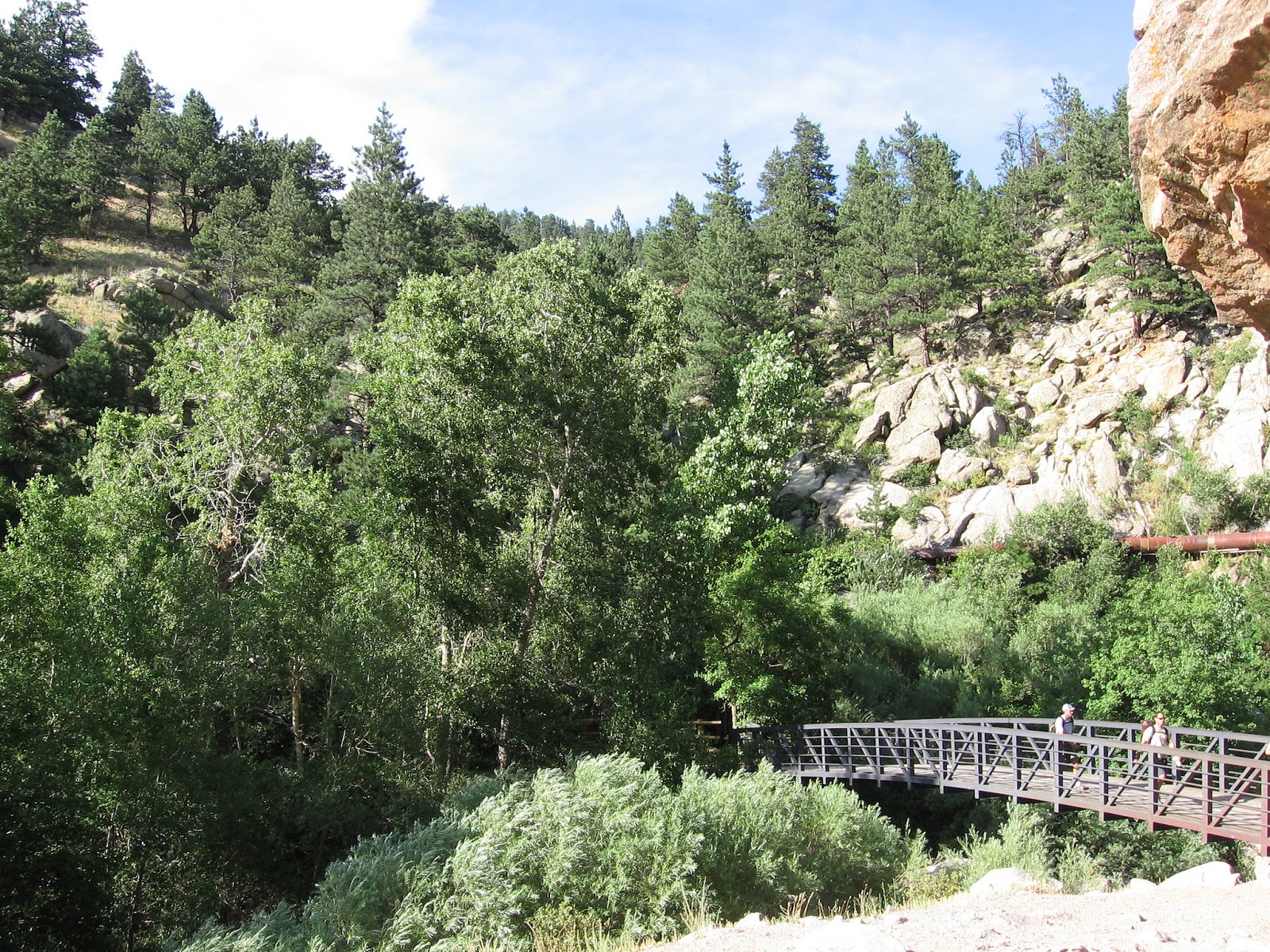
Hiking near Boulder, Colorado

I was recently diagnosed with Lyme Disease.  Part of the effect of the antibiotic treatment includes the release of endotoxins by the microbes as they begin to die: Those microbes and endotoxins, in addition to making me hurt everywhere all the time, cause hormone imbalances that cause severe mood swings.  


Sadness and Frustration 

To be clear, the swings of sadness and frustration I am feeling are probably more to do with my lack of physical energy, which has caused me to be homebound for the last few weeks in a dirty home, as I have not had the time or energy to do much of the cleaning I normally like to do.  The depression, itself, however, goes deeper and causes irrational feelings of hopelessness, anxiety, and worthlessness, or even hours at a time of complete apathy and emotional numbness.  The feelings, or lack of feeling, comes and goes in waves, luckily, so I "snap out of it" as the day goes on and feel like myself in the late afternoon or early evening - before I take another antibiotic, and it starts all over, again.


Fear

Native Cactus near Boulder, Colorado
One thing that is persistent, however, is my fear that I will never again be able to enjoy the outdoors like I once did for fear of being reinfected. Once I take my morning antibiotic, I know that for the next several hours I am going to experience the physical and emotional effects of the microbes and endotoxins, and that my fear is going to grow over the course of the day until my body can catch up on eliminating the toxins causing my reactions. Although there isn't a whole lot more I can do to quickly eradicate the microbes and their toxins, I can combat some of that daily emotional upheaval with aromatherapy via my oil burner. Specifically, I think I have perfected a blend that reminds me of one of my most favorite places in the universe, the wooded mountain trails near Boulder, Colorado.


Aromatherapy Outdoor Blend: Rocky Mountain Trail


I use an oil burner that has been saturated with my own Thieves Blend over the course of several years, which adds a hint of cinnamon and clove to all of my aromatherapy recipes (and helps cleanse the air). If you do not have a Thieves Blend, simply add a one drop each of cinnamon, rosemary, clove, and lemon to this recipe.

5 drops Cedarwood Oil
3 drops Pine Needle
3 drops Eucalyptus
2 drops Jasmine

This particular recipe utilizes all three, top, middle, and base notes for a great balance. Because it is an oil burning recipe only (not meant for skin contact or ingestion), there are few risks for side effects.  It simply helps me relax by reminding me of a place and time that made me happy.

Medical Care 

Boulder, Colorado, 2007
If you are new to aromatherapy, please be sure to research the effects of any oil that's unfamiliar to you - just in case.  Remember to wear gloves, if you aren't using pipettes, to be sure there is no skin contact with any of your aromatherapy oils to prevent irritation.  Of course, you should also talk to your doctor, LLMD, integrated medical practitioner, or herbalsit if you have any questions or concerns about your Lyme treatment symptoms or using aromatherapy, especially if the symptoms seem to be worse than you can handle. Although aromatherapy is a great addition to your care, it is definitely no substitute.


Be well,
Amy


Copyright Amy Lynn Hess.  Please contact the author for permission to republish.

Using ChatGPT for Essays in English Composition Classes

The best essays are written by people for people. "Corona Typewriter" image courtesy of the author ChatGPT and other AI language g...